
Location Snapshot – Customer Location Data And Analytics Overview
Route4Me’s Location Snapshot provides a clear, centralized view of all data associated with any saved Customer Location. It helps you review visits, routes, performance metrics, and operational details in one place so you can quickly analyze trends and make informed decisions. Learn how to open a Snapshot, navigate its data categories, and filter the information you need.
NOTE: The Location Snapshot feature is currently available only by request. To enable this feature, contact Customer Support.
Table of Contents
Open Location Snapshot – Location Data And Analytics Overview
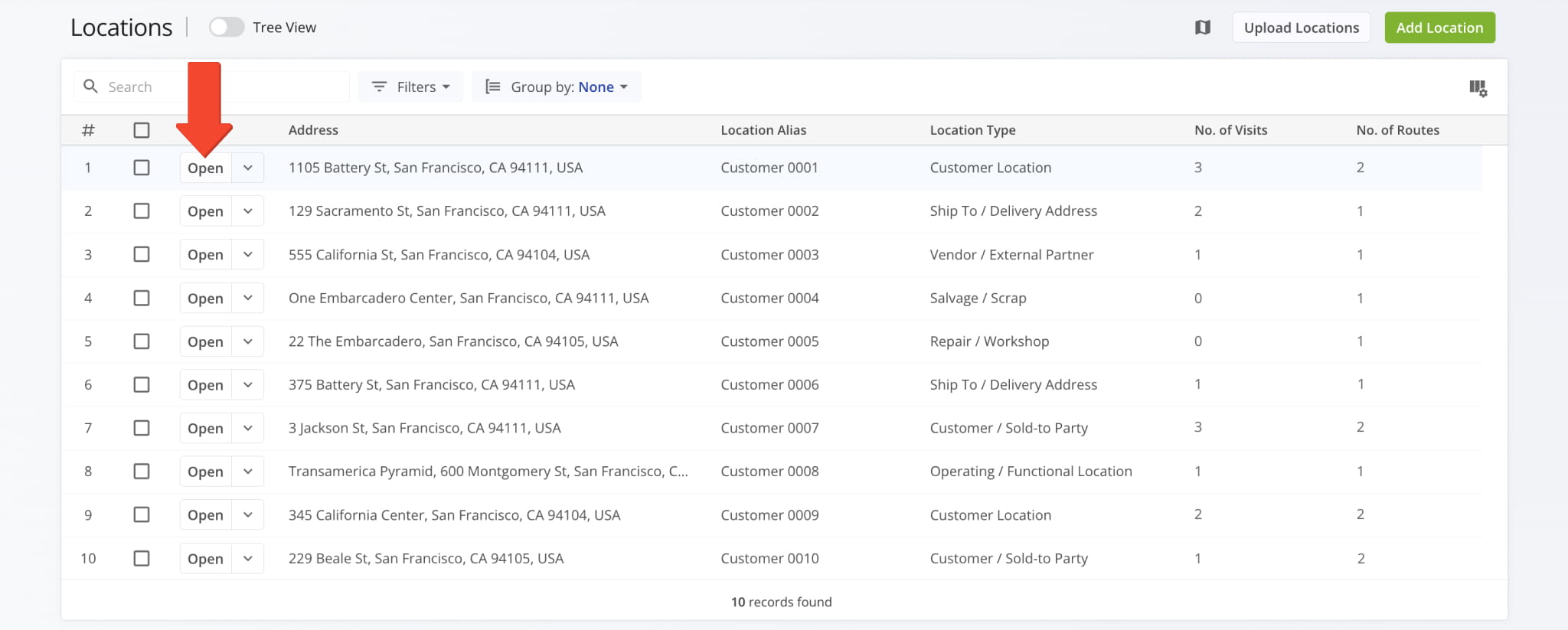
To open a Locations Snapshot, go to “Database” > “Locations” from the Navigation Menu. Then, from the Locations Page, click the “Open” button next to the desired Location.
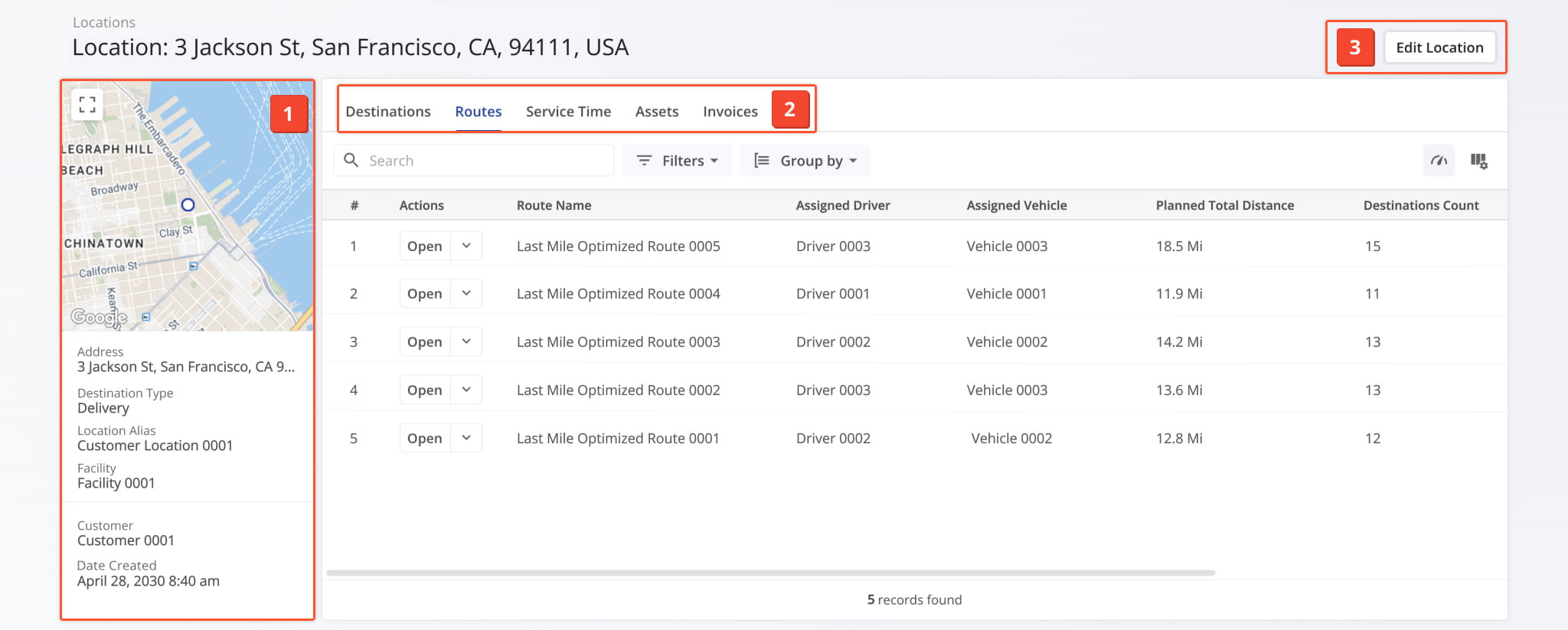
One the Snapshot is opened, you’ll see a detailed interface designed to help you review and manage all Location data:
- Location Summary: A quick overview of essential information including the address, destination type, creation date, and more.
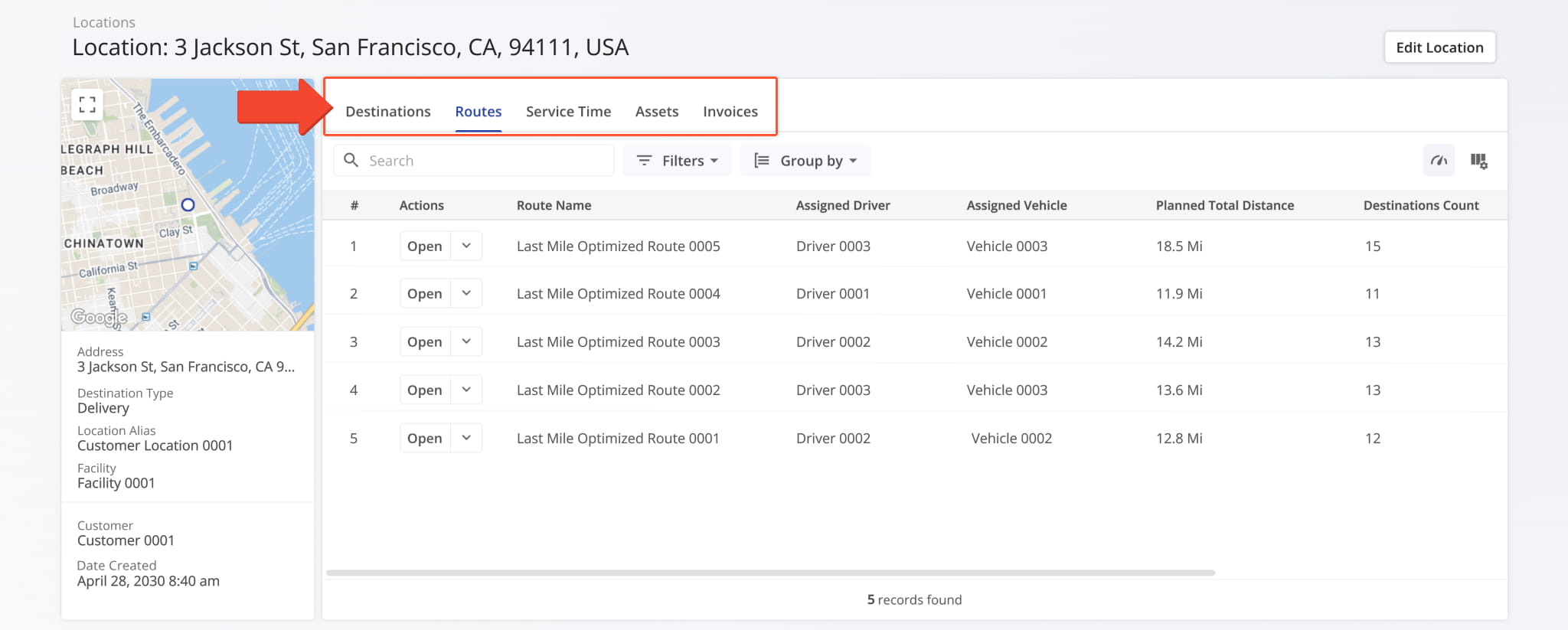
- Location Tabs: Switch between “Destinations“, “Routes“, “Service Time“, “Assets“, and “Invoices” to explore Location data.
- Edit Controls: Access the “Edit Location” button to modify Location details.
All data is centralized and accessible, making it easier to analyze Location information, spot trends, and plan accordingly.
Location Profile Overview – Map, Assignments, Performance Metrics
Dynamic Map And Location Information Panel
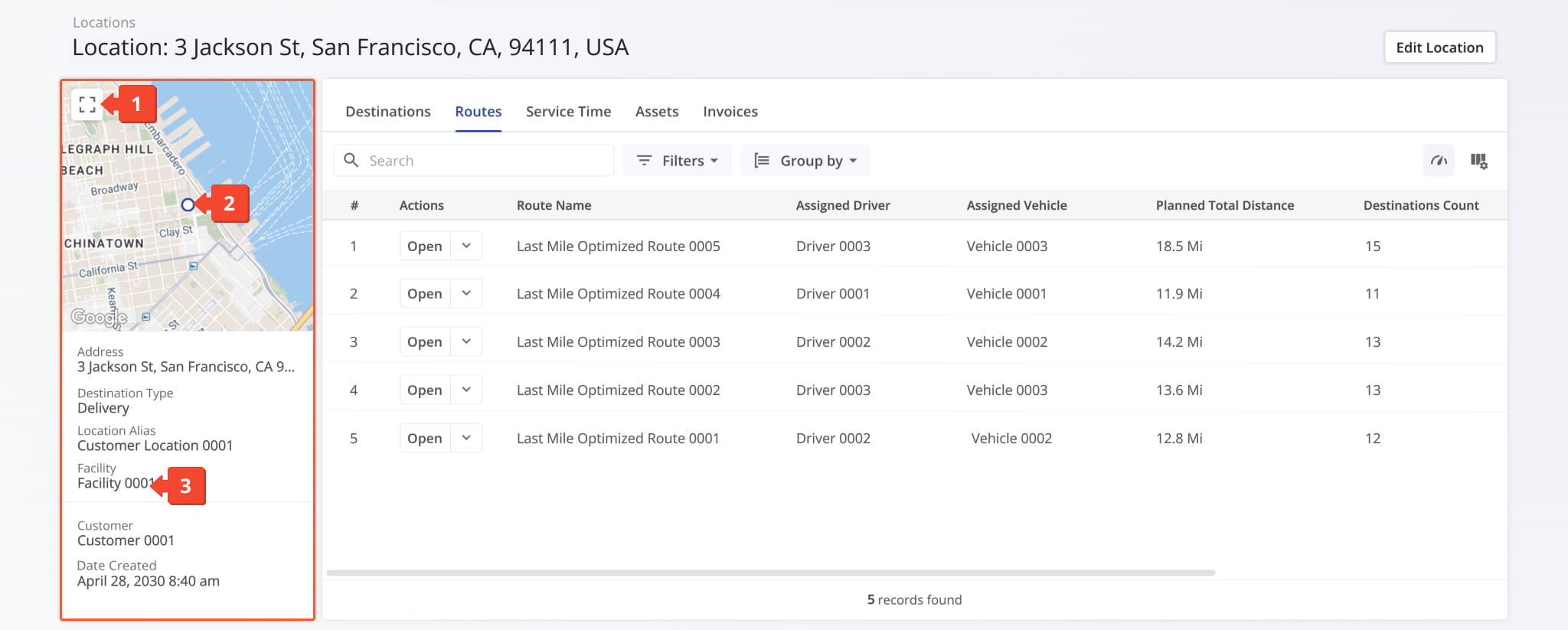
The Location Summary panel displays key details about the Location, including address, assigned Customer, and contact information, alongside a map of the Location’s position. From this panel, you can:
- Click the Frame Icon to expand the map to full-screen for a broader view.
- Click the Location dot on the map to view detailed information including its number of attached notes, number of visits, and more.
- Click “Assign Facility” to associate the Location with a last mile facility. NOTE: Locations can be assigned to multiple facilities.
Performance Metrics Panel
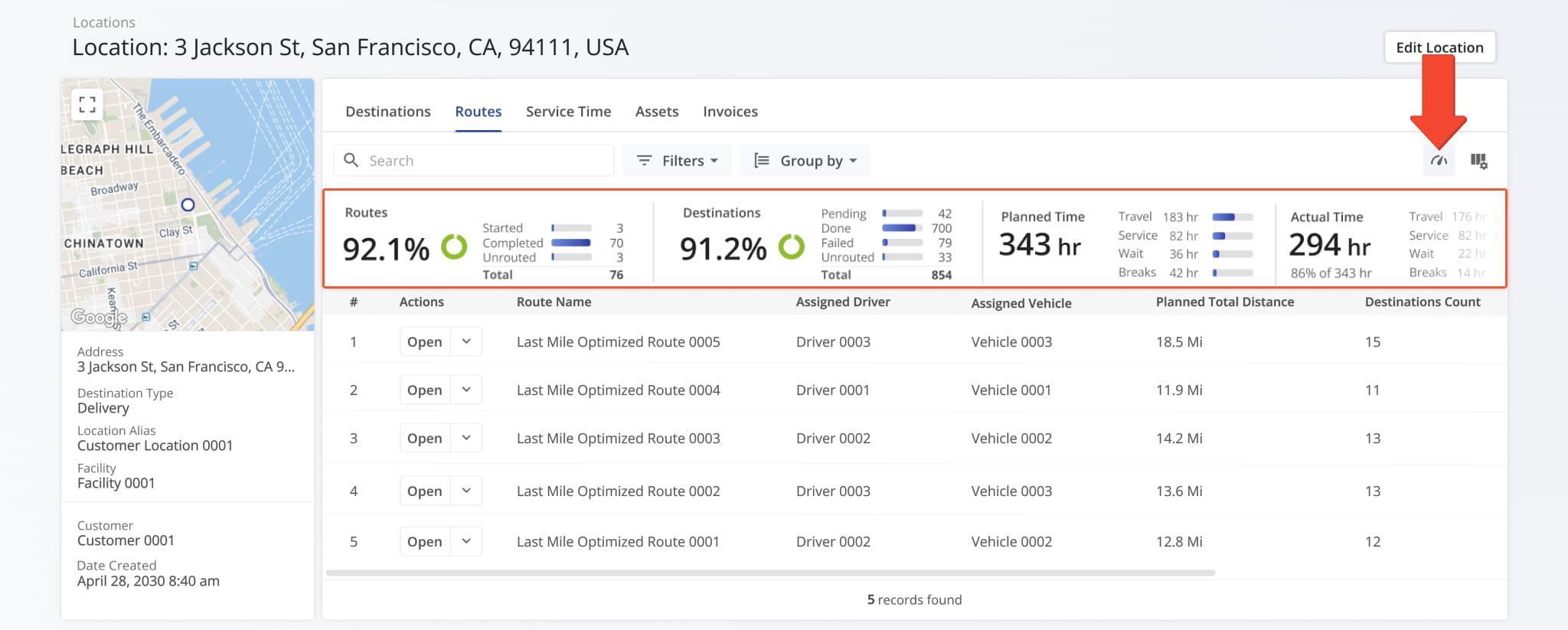
Click the Metrics Icon in the upper-right corner to open the Location’s Performance Metrics panel, where you can monitor progress, track efficiency, and evaluate operational performance across routes.
This panel provides a summary of planned routes and destinations associated with the Location, along with a side-by-side breakdown of planned and actual time for travel, service, wait, and breaks.
NOTE: The Metrics Panel is available from the Destination tab and the Routes tab but shows different metrics depending on where you open it. Open it from the Destinations tab for destination metrics, or from the Routes tab for route metrics.
Location Snapshot Categories – Analytics Overview Data Tabs
The User Snapshot is organized into multiple tabs, each corresponding to a specific category of associated data described below.
Routes Tab – Assigned Routes And Route Data Overview
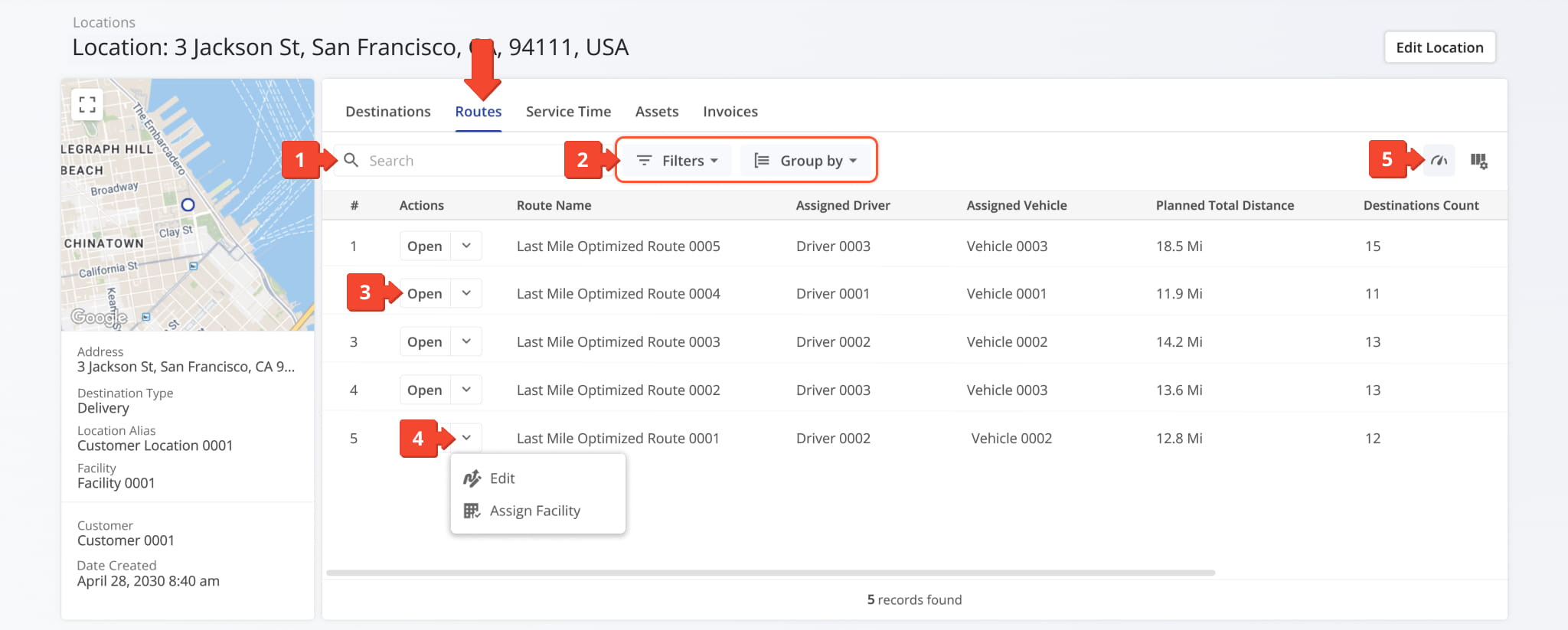
By default, the Routes tab opens when you access a Location Snapshot, displaying all routes linked to the Location in a customizable table. From this tab, you can:
- Use the Search field to locate routes associated with the Location.
- Narrow down Routes with filters, as described in the table below, or with Group By options.
- Click “Open” next to a route to access its Route Snapshot.
- Click the Down Arrow button to modify the route in the Route Editor or assign the route to a facility.
- Click the Metrics Icon to review detailed route data in the Metrics Panel.
Routes Tab Filters
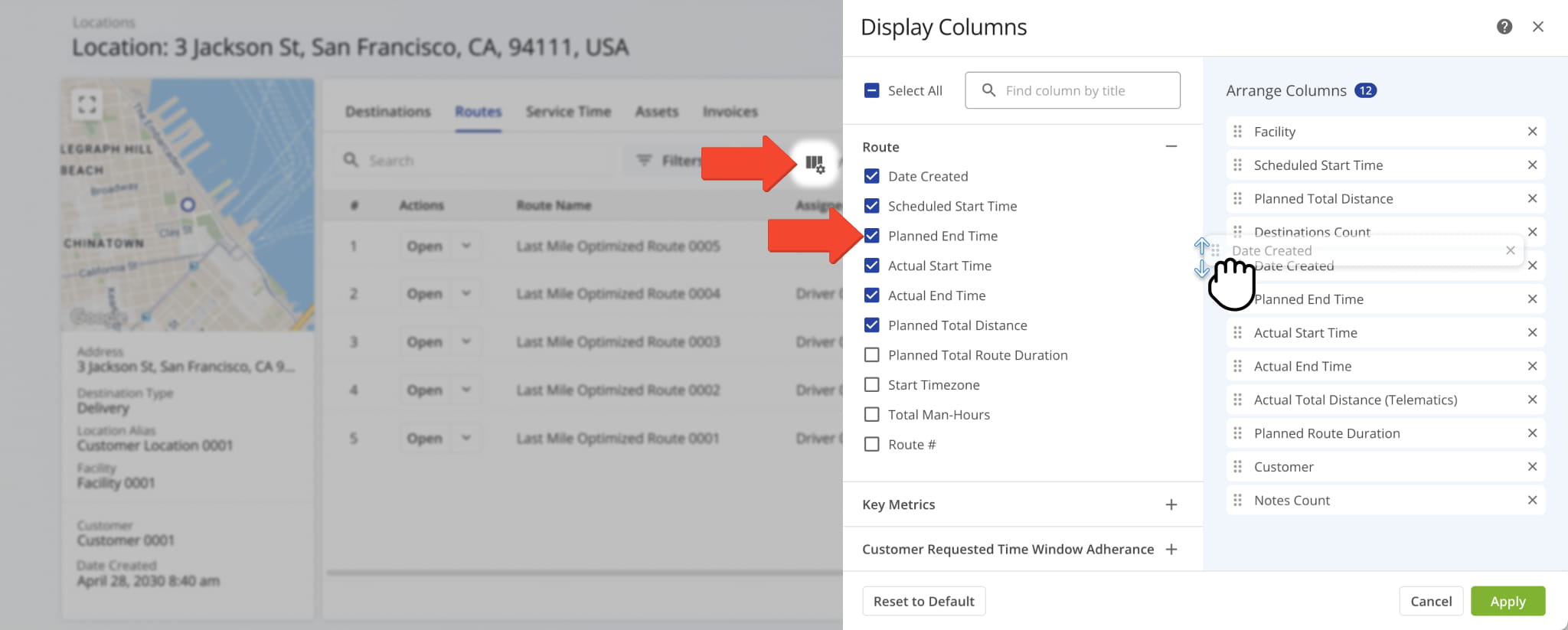
You can also customize the data displayed in the table. Click the Column Icon in the upper right corner to select which route data fields appear and adjust their order to suit your operational needs.
The table below provides an overview of all available data columns, which you can reorder by dragging them into place.
Routes Tab Data Columns
Destinations Tab – Assigned Destinations And Data Overview
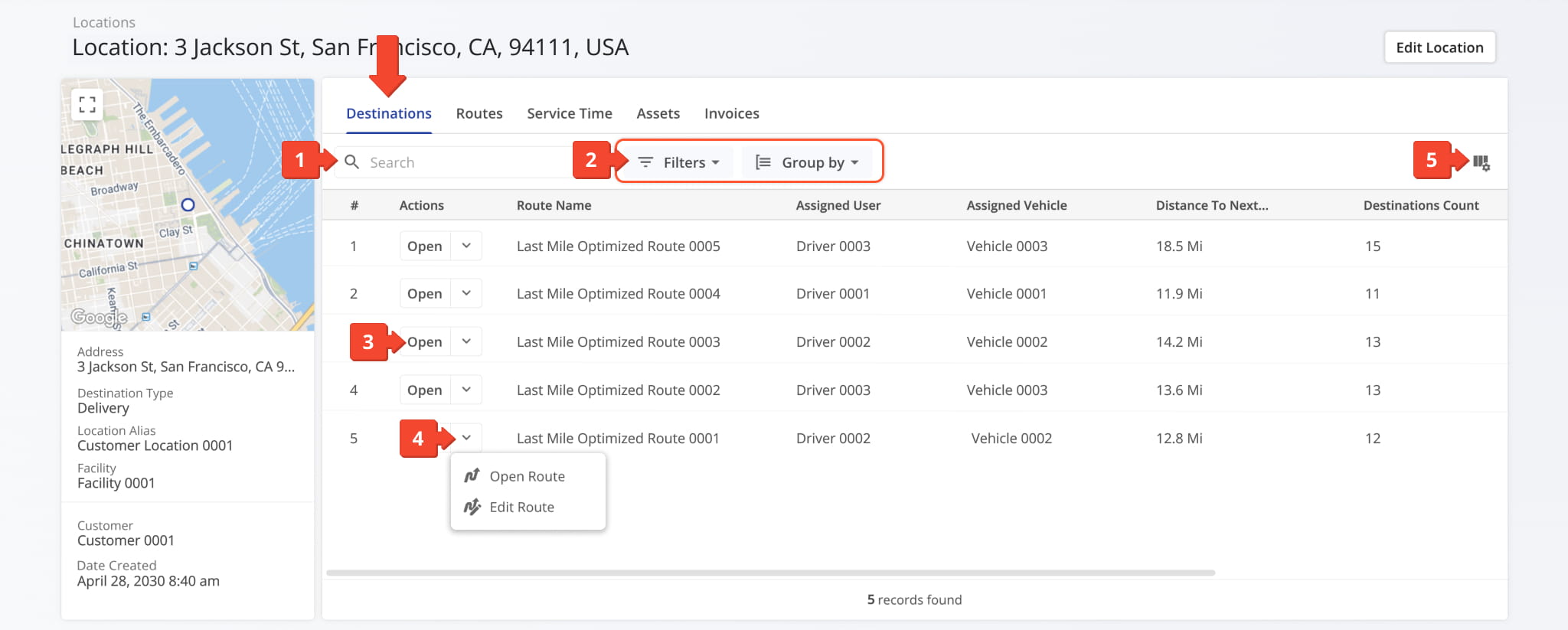
When the Destinations tab is open, you can view all destinations associated with the selected Location in a customizable data table. From this tab, you can:
- Use the Search field to locate destinations associated with the Location.
- Narrow down destinations with filters, as described in the table below, or with Group By options.
- Click “Open” next to a route to access its Destination Snapshot.
- Click the Down Arrow and select “Open Route” to access its Route Snapshot or “Edit Route” to modify the route in the Route Editor.
- Click the Metrics Icon to review detailed destination data in the Metrics Panel.
Destinations Tab Filters
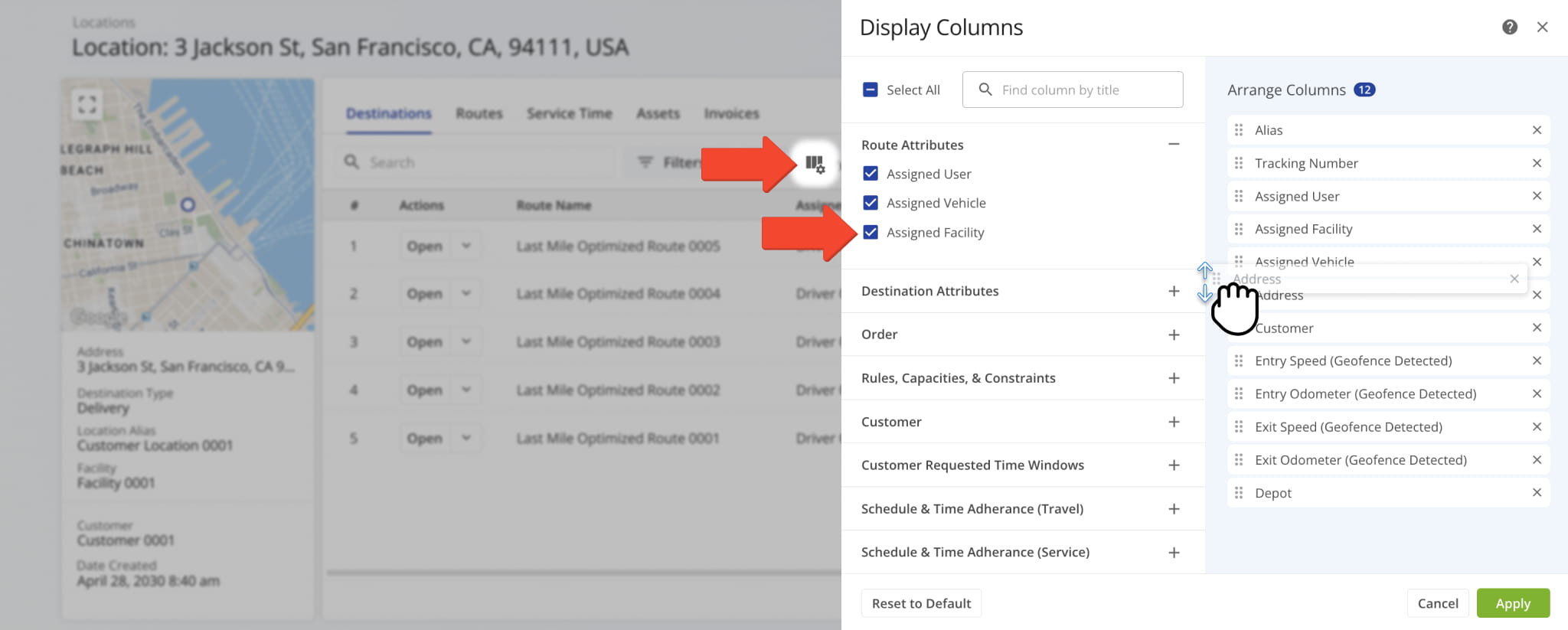
You can also customize the data displayed in the table. Click the Column Icon in the upper right corner to select which data fields appear and adjust their order to suit your operational needs.
The table below provides an overview of all available data columns, which you can reorder by dragging them into place.
Destinations Tab Data Columns
Service Time Tab – Service Time Destinations And Performance Overview
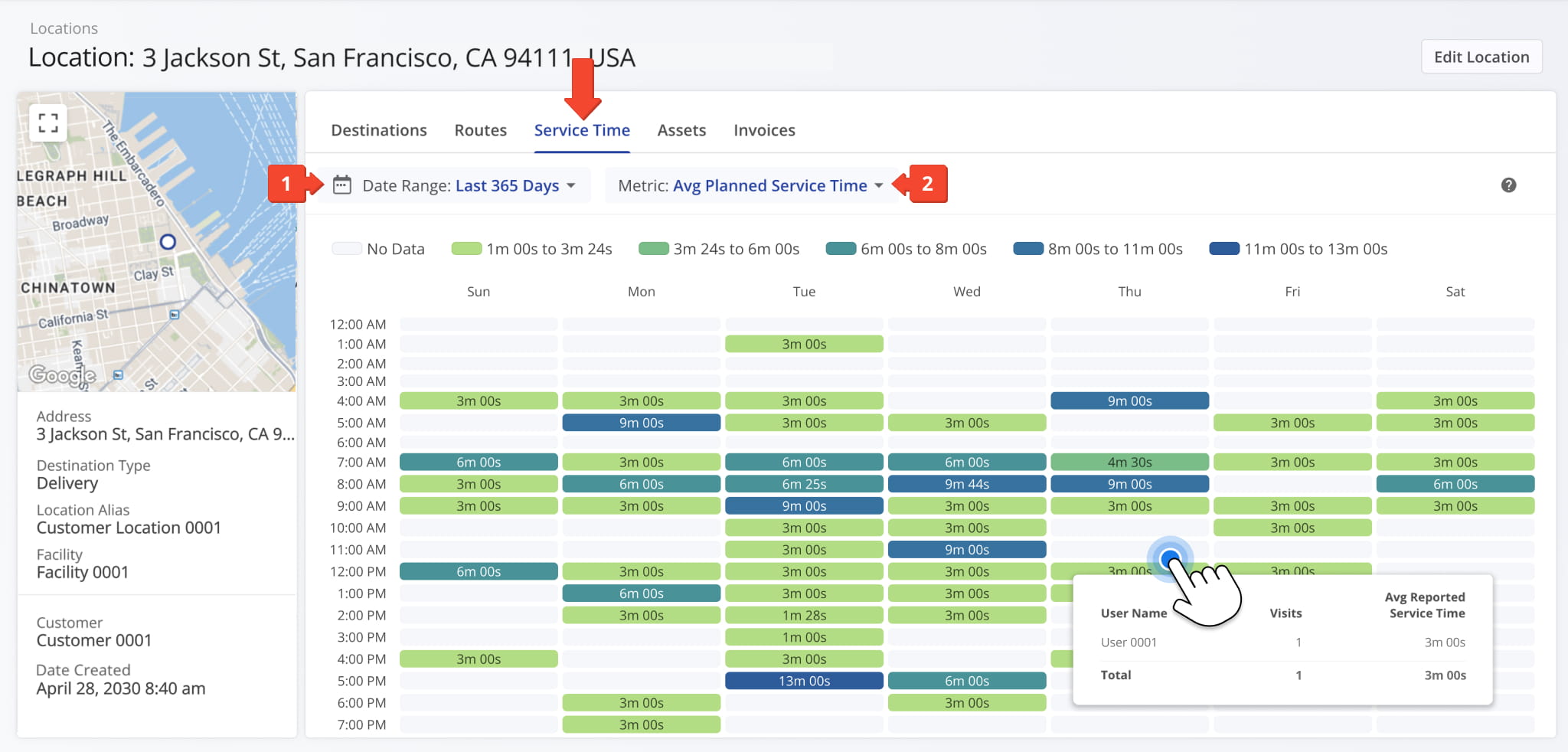
The Service Time tab shows the distribution of Destination Service Time at a specific location across the days of the week within a selected time period.
This view provides a clear breakdown of how planned, reported, and detected service times are distributed, helping you quickly identify patterns and performance gaps. From this tab, you can:
- Filter data by date range.
- Filter data by service time metrics, described in the table below.
Service Time Tab Data Columns
Assets Tab – Assigned Assets And Asset Data Overview
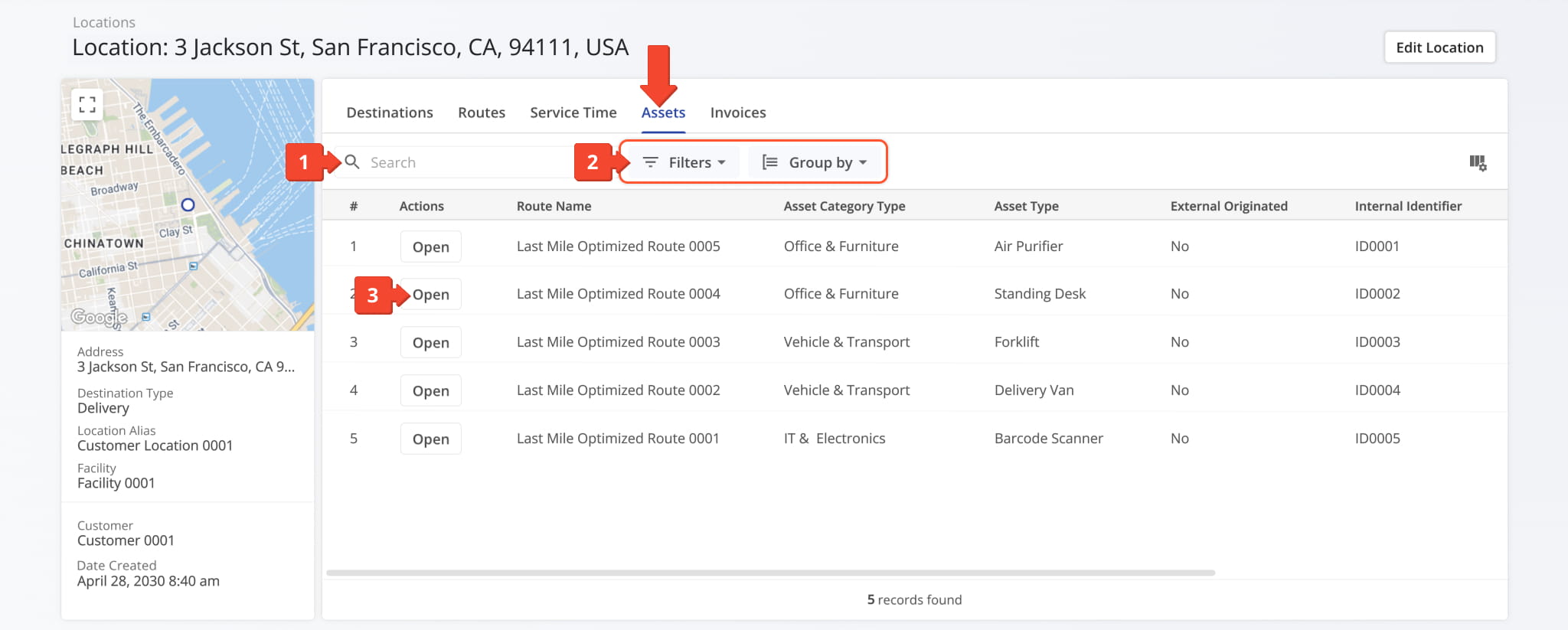
The Assets tab displays all assets associated with the selected Location in a customizable data table. From this tab, you can:
- Use the Search field to locate assets associated with the Location.
- Narrow down assets with filters, as described in the table below, or with Group By options.
- Click “Open” next to a route to access its Asset Snapshot.
Assets Tab Filters
You can also customize the data displayed in the table. Click the Column Icon in the upper right corner to select which data fields appear and adjust their order to suit your operational needs.
The table below provides an overview of all available data columns, which you can reorder by dragging them into place.
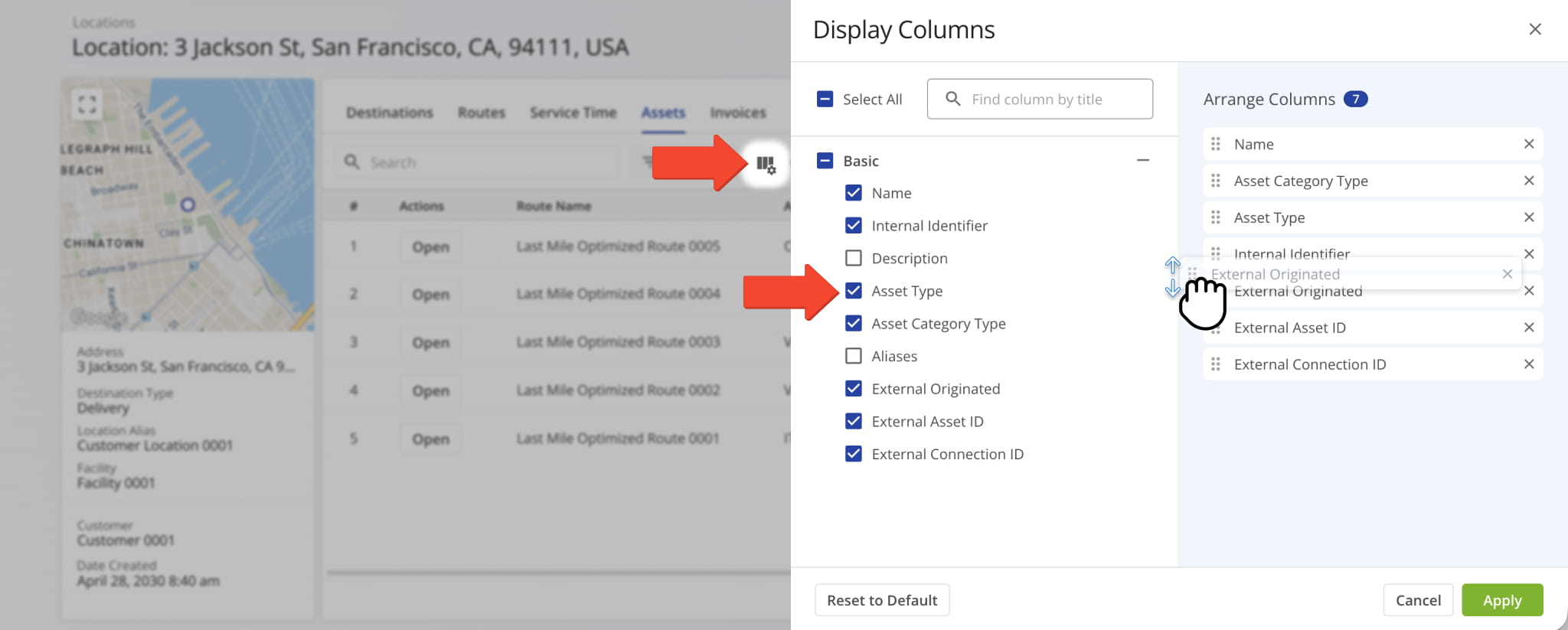
Assets Tab Data Columns
Invoices Tab – Assigned Invoices And Billing Data Overview
The Invoices tab displays all invoices associated with the selected Location in a customizable data table. From this tab, you can:
- Use the Search field to locate invoices associated with the Location.
- Narrow down invoices with filters, as described in the table below, or with Group By options.
- Click “Open” next to a route to access its Invoice Snapshot.
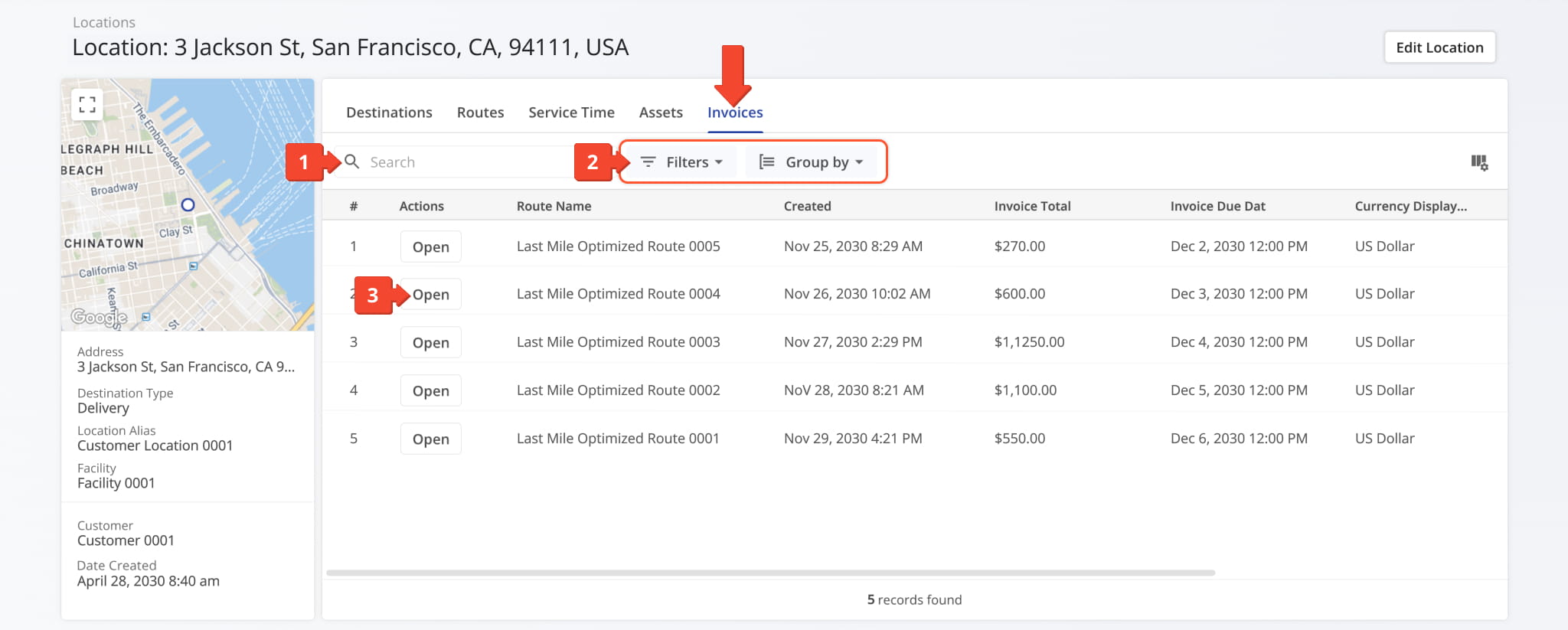
Invoices Tab Filters
You can also customize the data displayed in the table. Click the Column Icon in the upper right corner to select which data fields appear and adjust their order to suit your operational needs.
The table below provides an overview of all available data columns, which you can reorder by dragging them into place.
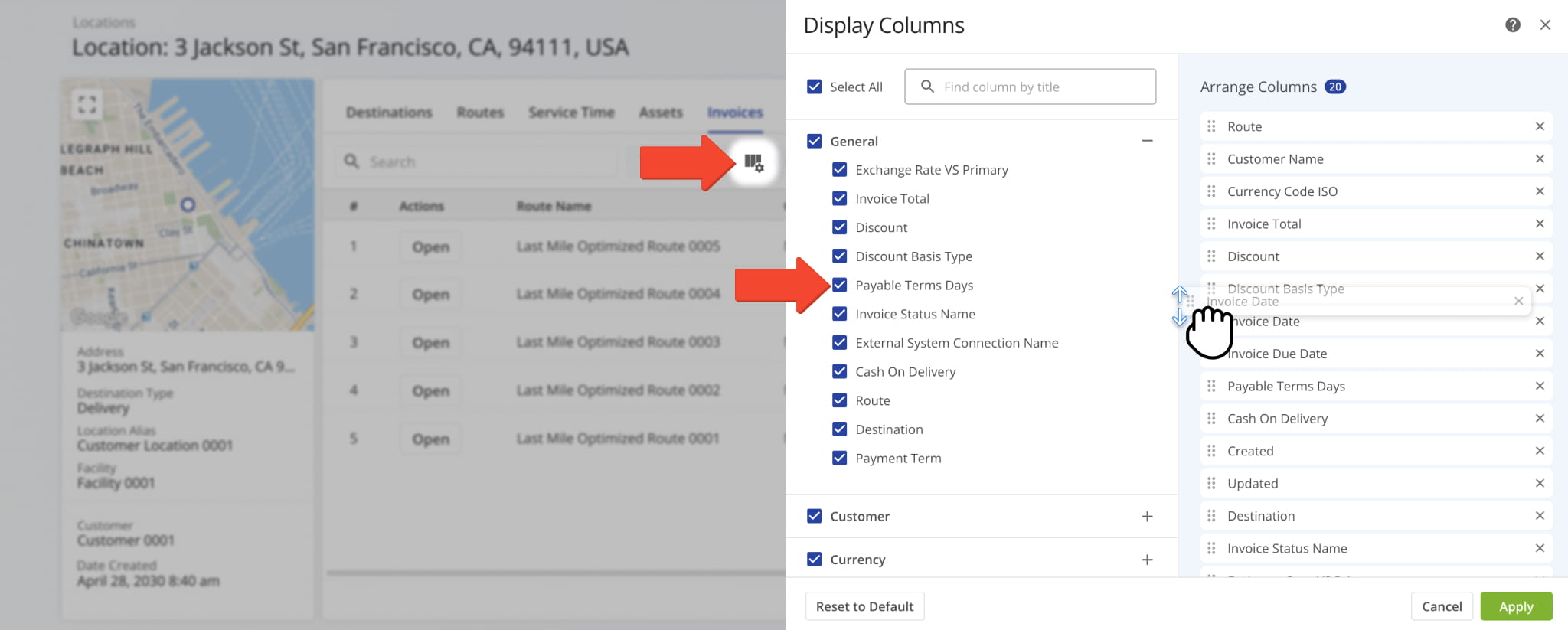
Invoices Tab Data Columns
Visit Route4Me's Marketplace to Check out Associated Modules:
- Operations
Audit Logging and Activity Stream
- Operations
Custom Data Add-On
- Operations
Advanced Team Management Add-On
About author: Daniel Archer