
Destination Bundling – Group Route Stops By Address Or Coordinates
When planning routes, multiple deliveries often go to the same address or building. Route4Me simplifies this by bundling nearby destinations into a single stop, saving time and reducing fuel costs. Bundling is especially helpful for managing multiple orders at the same location, as it keeps each order’s details separate while allowing drivers to complete deliveries efficiently. This guide shows how to customize bundling rules to fit your orders and optimize route performance.
Table of Contents
Plan Routes With Destination Bundling
Bundle Destinations From Manual Optimization Settings
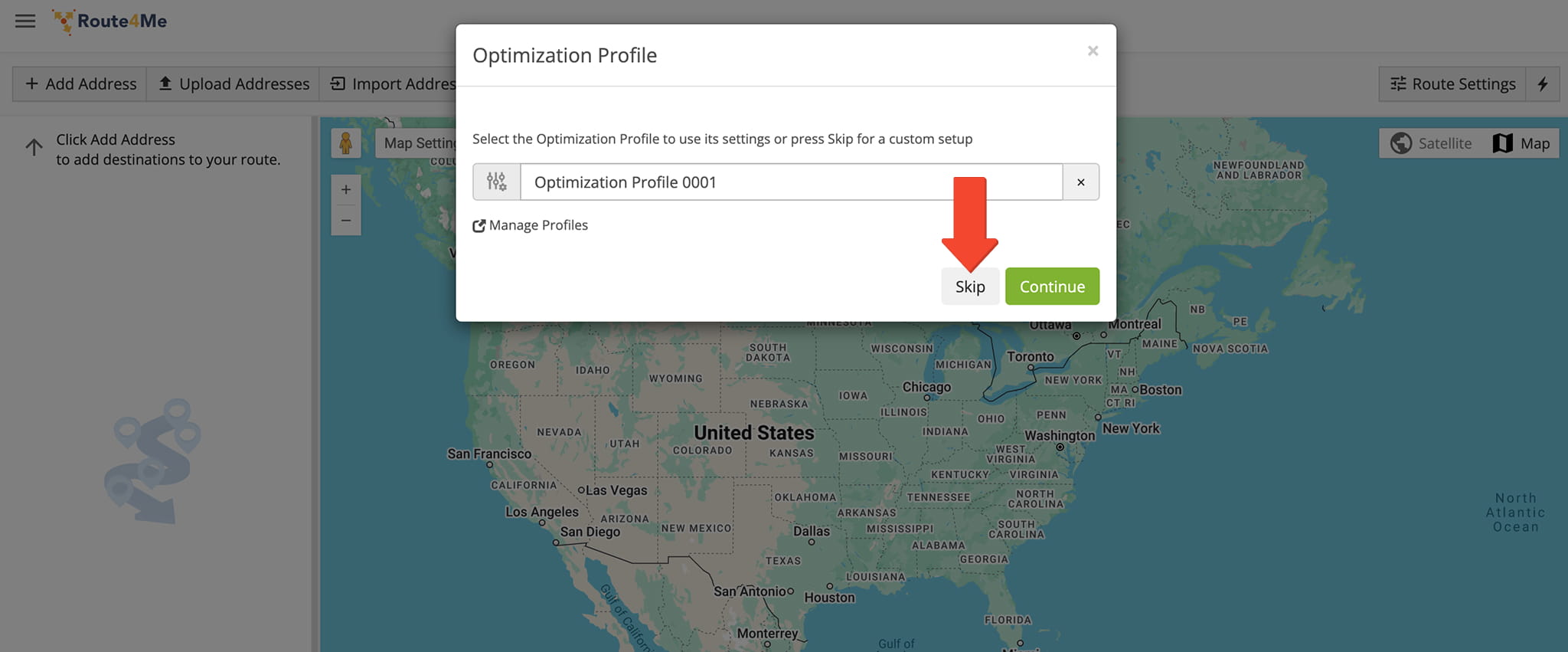
To bundle destinations from manual optimization settings, go to “Dynamic Routing” > “Plan New Route” in the Navigation Menu. Choose your route planning method, then be sure to click “Skip” to customize the route’s optimization settings.
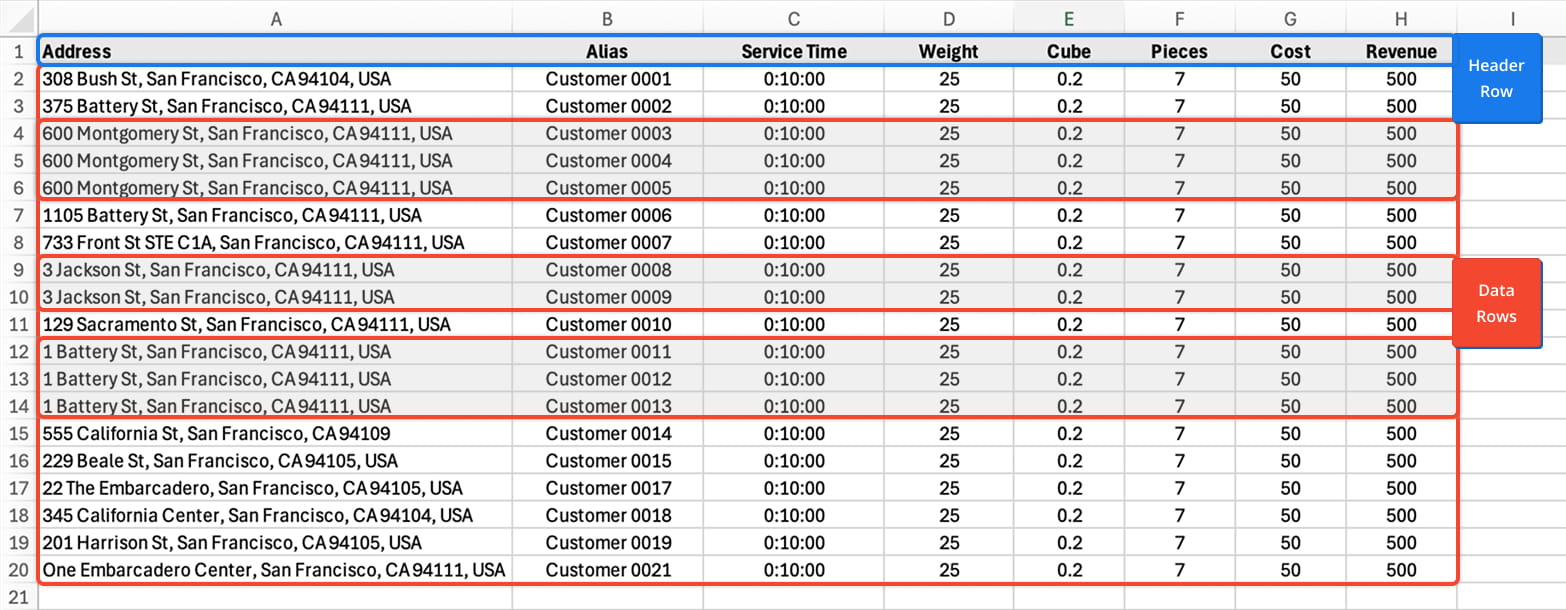
To enable Destination Bundling, upload a spreadsheet with destinations that share the same address or coordinates. You can also include order data like Weight, Revenue, or Cube. These values will be automatically grouped and used in route optimization.
This is particularly useful when multiple orders are going to the same address or building but need to be delivered to different recipients or departments, allowing drivers to complete all deliveries efficiently while keeping each order’s details separate.
Make sure your spreadsheet has a Header Row and includes an “Address” column, plus any optional fields you want to use. NOTE: Learn more about spreadsheet formatting.
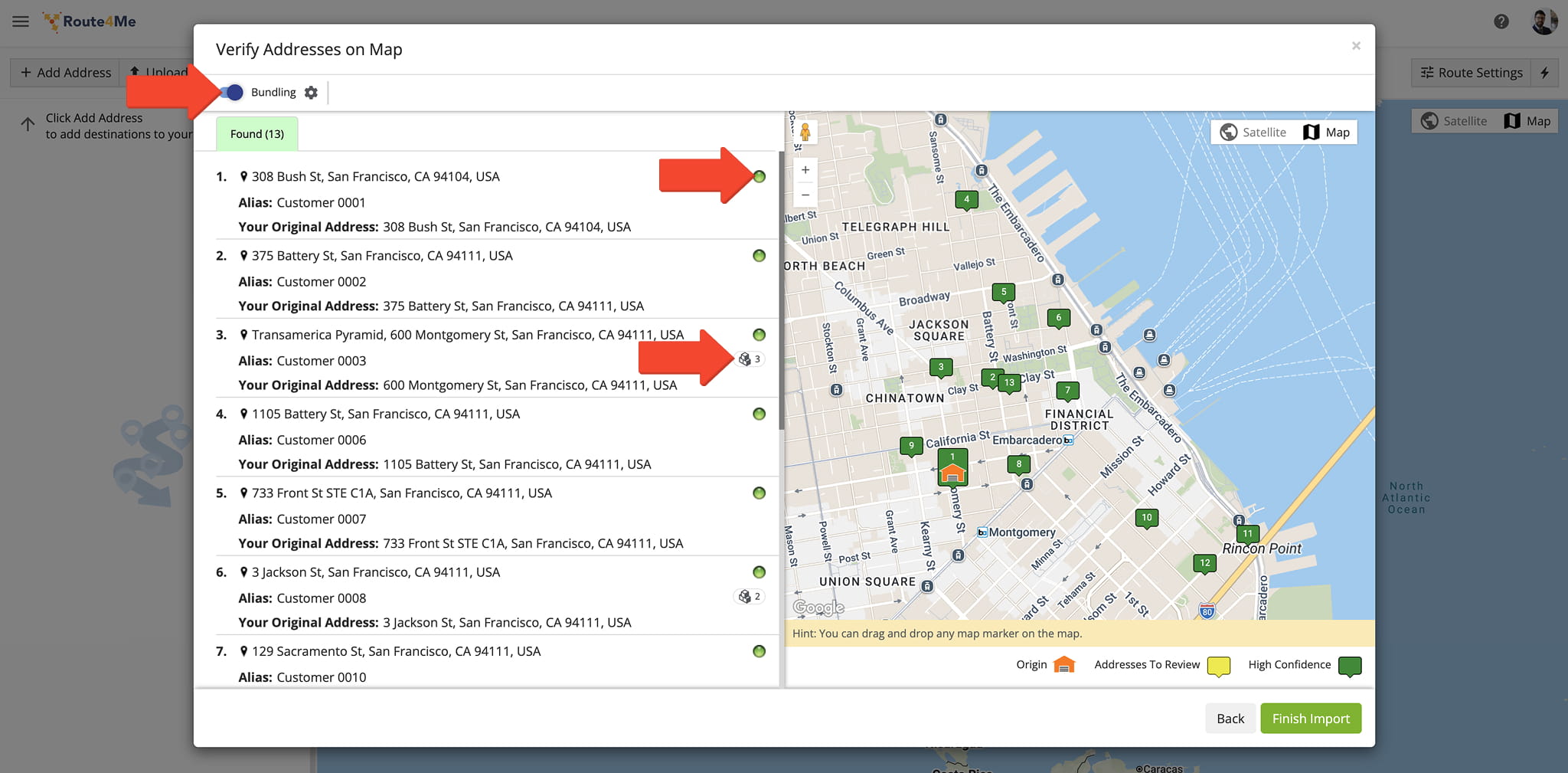
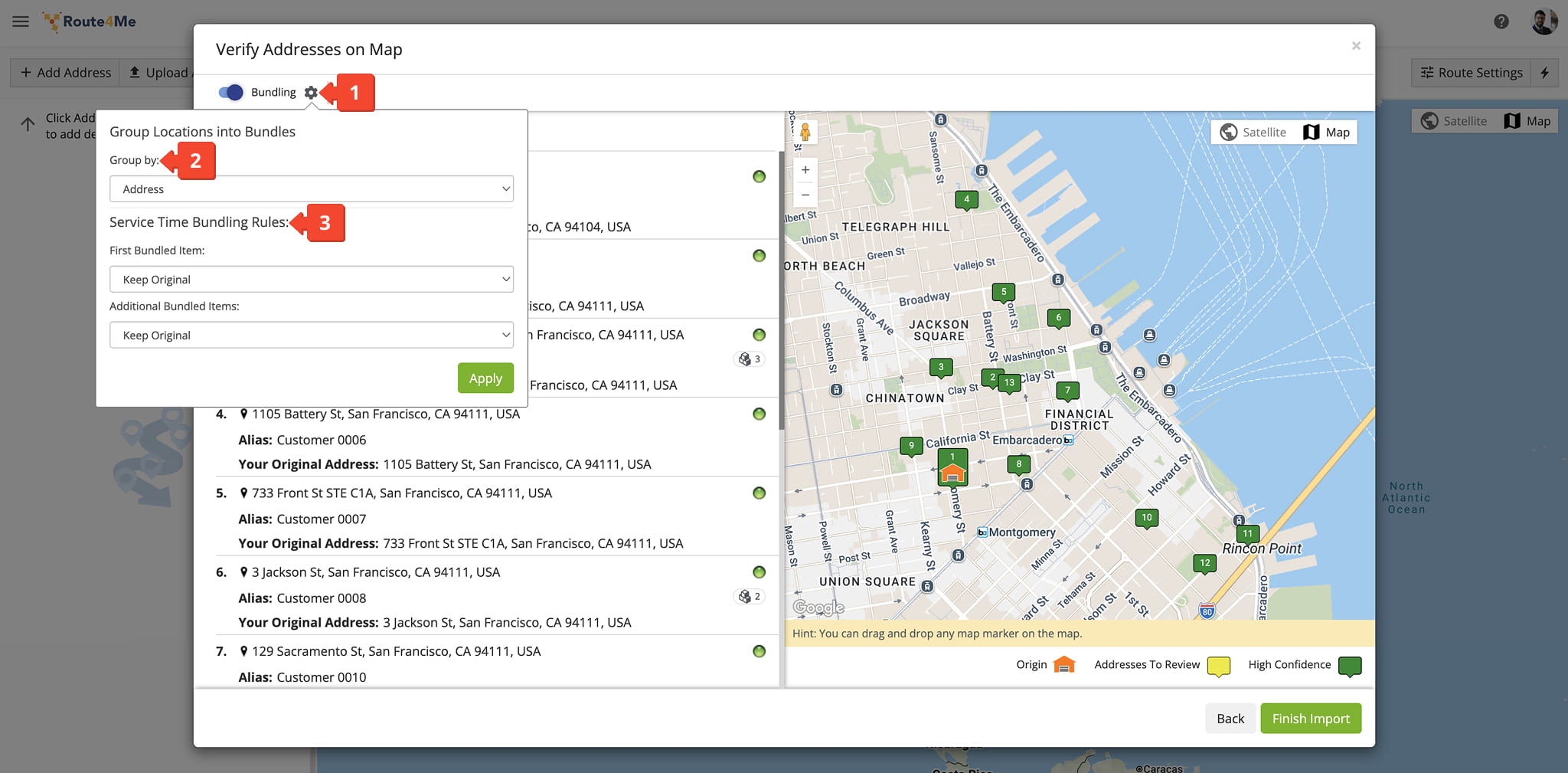
After uploading your address spreadsheet, check for green dots to confirm accurate geocoding, then enable “Bundling” to group destinations. Each group shows an icon with the number of destinations.
To adjust Bundling settings:
- Click the Gear Icon to access the “Group Locations into Bundles” window:
- Specify in the “Group By” dropdown if you want to bundle by same address, same coordinates (latitude and longitude), or same ID.
- Adjust the Service Time Bundling Rules for the bundled route stops. Selecting “Keep Original” in the dropdowns for “First Bundled Item” and “Additional Bundled Items” will keep the Service Times unchanged from your uploaded spreadsheet or optimization settings.
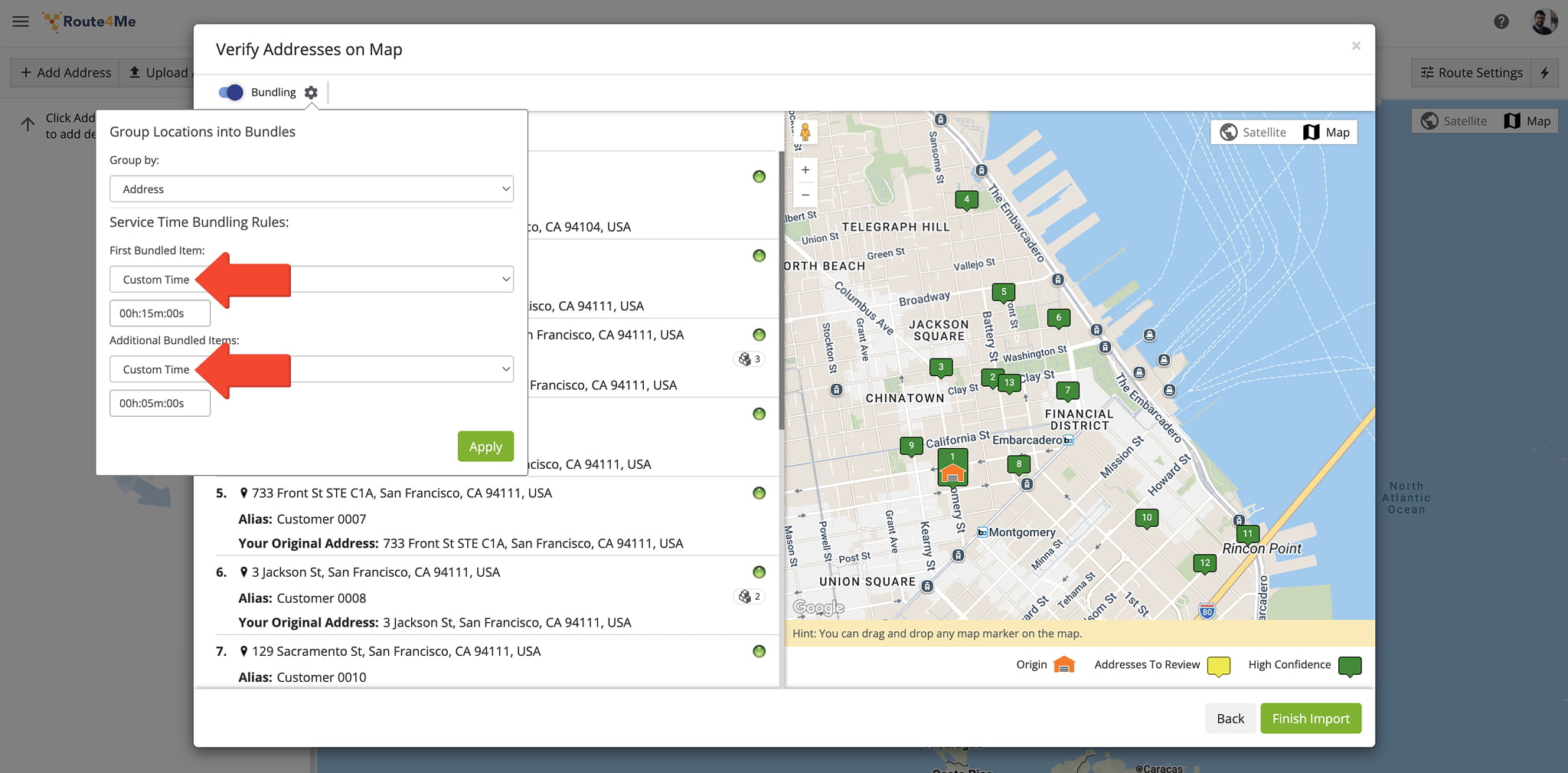
You can customize Service Times for Bundled destinations to improve ETAs and overall route duration.
Since the first stop in a Bundle typically takes longer to service, use the “First Bundled Item” field for that time, and “Additional Bundled Items” for the rest. Adjust one or both to match your delivery needs.
Bundle Destinations From Optimization Profiles
You can also bundle destinations when creating or editing Optimization Profiles.
To access your Optimization Profiles, go to “Optimization Settings” > “Optimization Profiles” in the Navigation Menu. From the Profile editor panel, click “Bundle Locations” under the “Bundling” tab.
Open Your Optimization Profiles
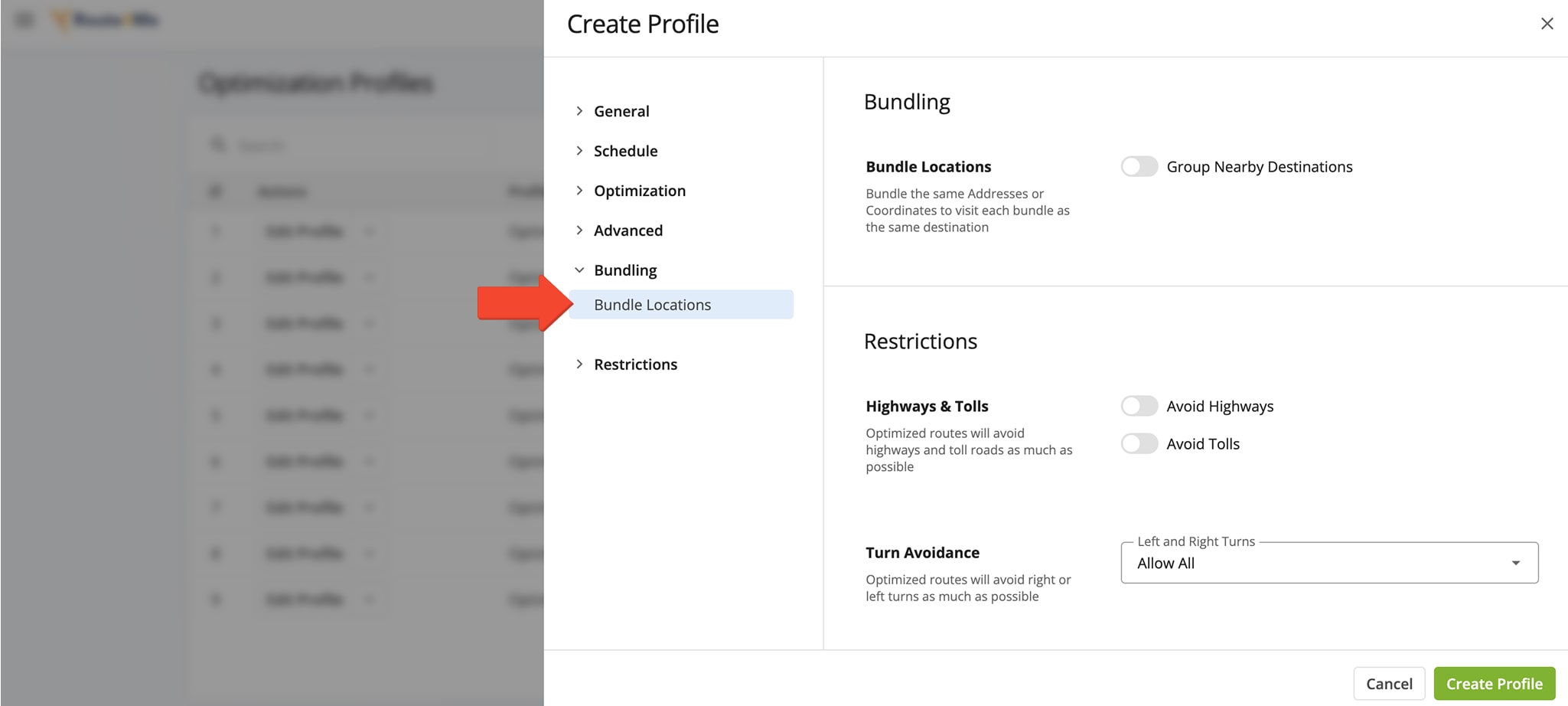
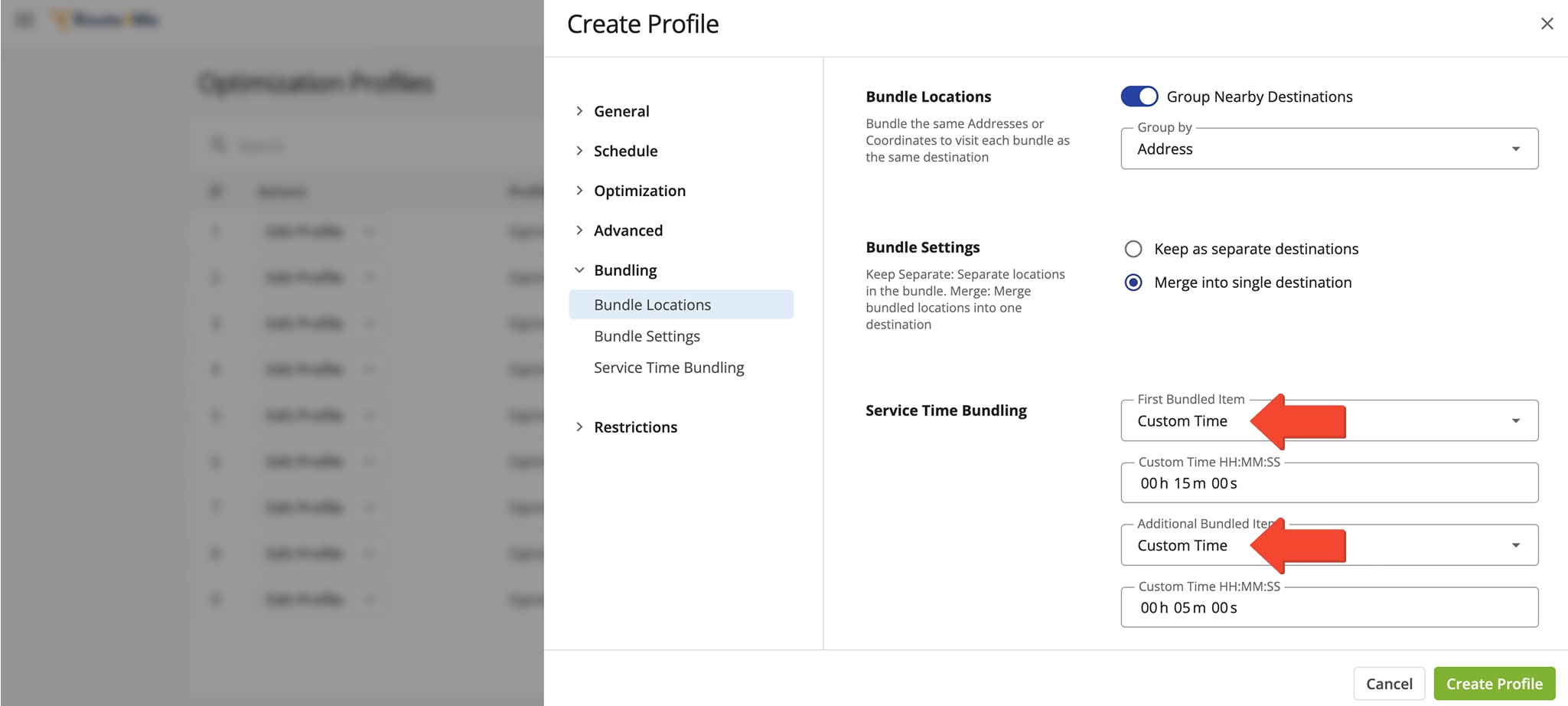
Then, toggle “Group Nearby Destinations” to enable destination bundling. To adjust bundling settings:
- In the “Group By” dropdown, specify if you want to bundle by same address, same coordinates (latitude and longitude), or same ID.
- Choose if you want to keep bundled locations as separate destinations or merge them into a single destination.
- Adjust the Service Time Bundling Rules for the bundled route stops. Selecting “Keep Original” in the dropdowns for “First Bundled Item” and “Additional Bundled Items” will keep the Service Times unchanged from your uploaded spreadsheet or optimization settings.
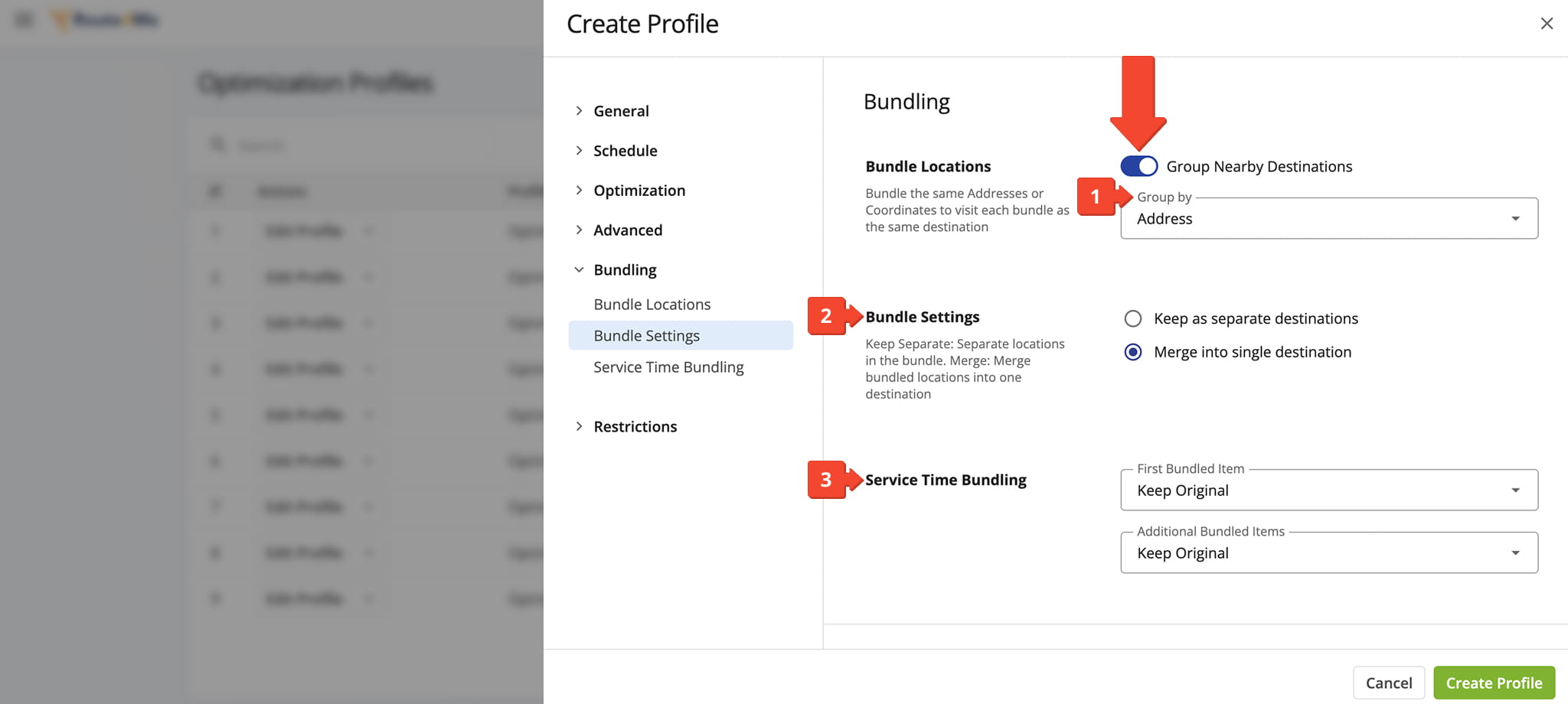
You also have the option to fine tune Service Times for each bundled destination, boosting accuracy, improving ETAs, and reducing overall route duration.
Since the first delivery in a bundle often takes longer, Route4Me lets you set a custom time for that stop using the “First Bundled Item” field, and separate times for the rest using “Additional Bundled Items”.
This level of control helps you deliver more efficiently, stay on schedule, and exceed customer expectations.
View Bundled Destination Data – Access Full Destination Group Details
View Bundled Destinations From Routes List
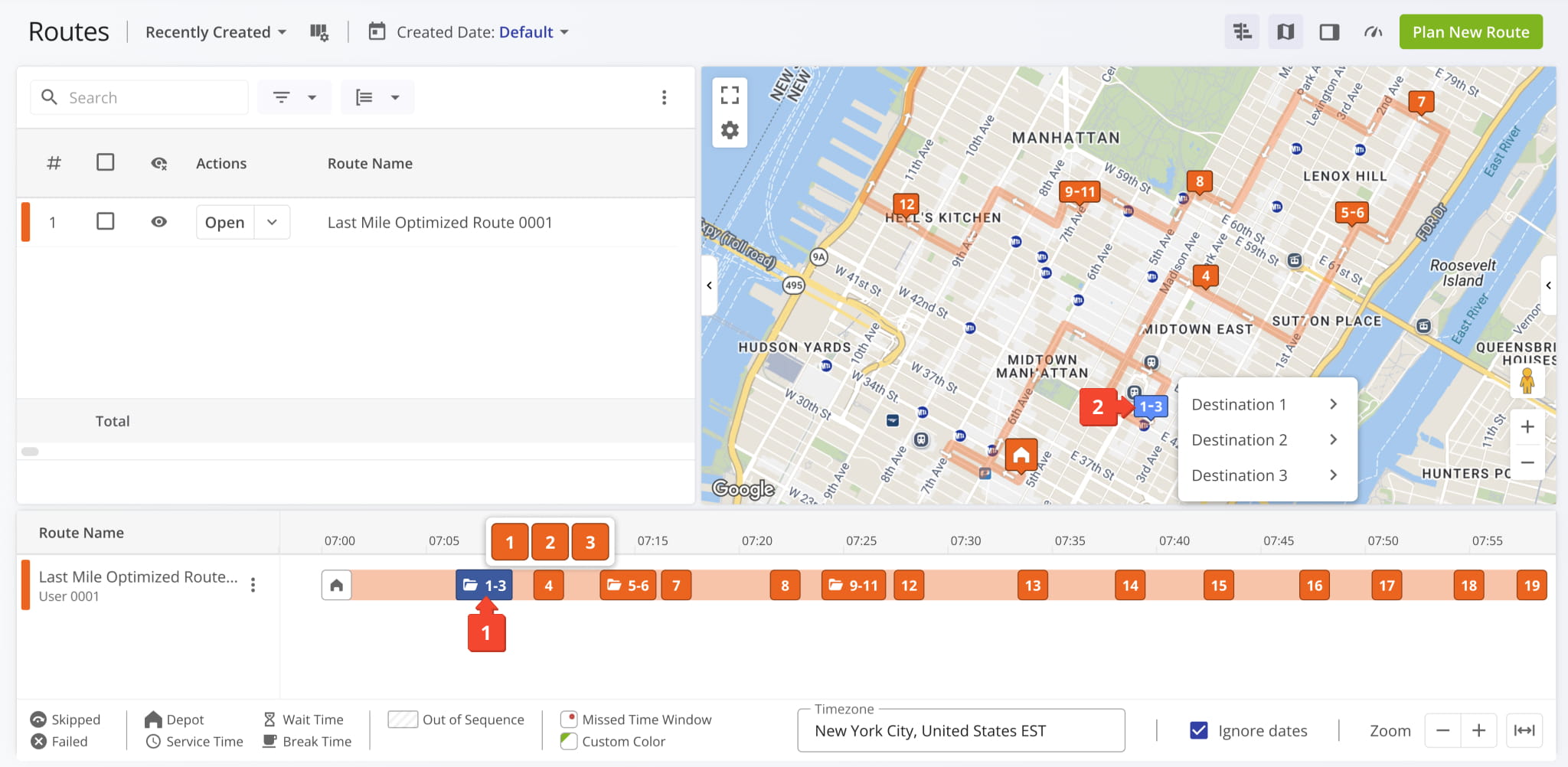
On the Routes List, bundled stops appear as Destination Groups on both the Routes Timeline and the Routes Map. You can quickly preview which stops are included in each bundle directly from this page:
- From the Timeline, hover over the bundled stop (identified by a File Icon) to see which destinations are included in that group.
- From the Map, hover over the Destination Group to view detailed information about each destination contained in the bundle.
View Bundled Destinations From Route Editor
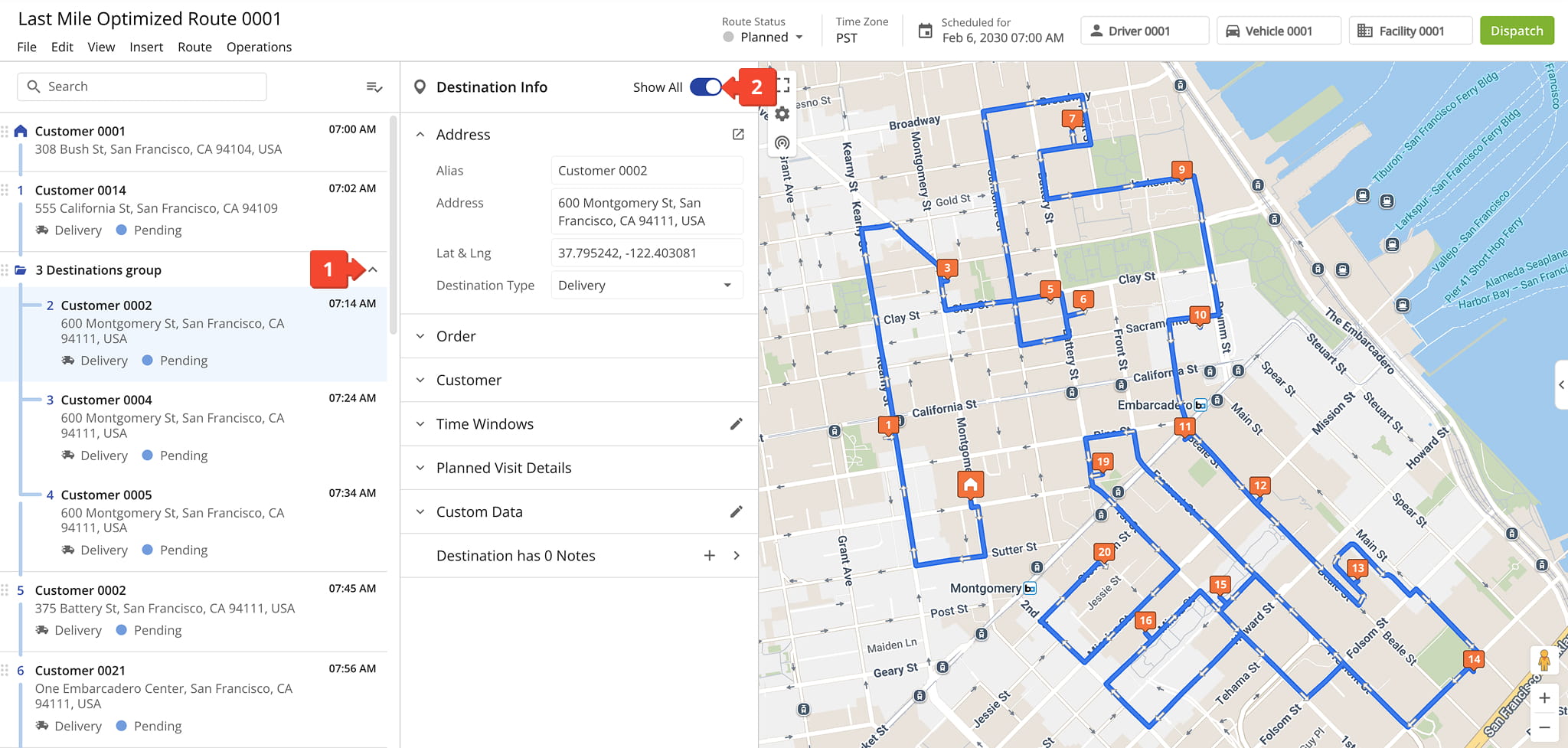
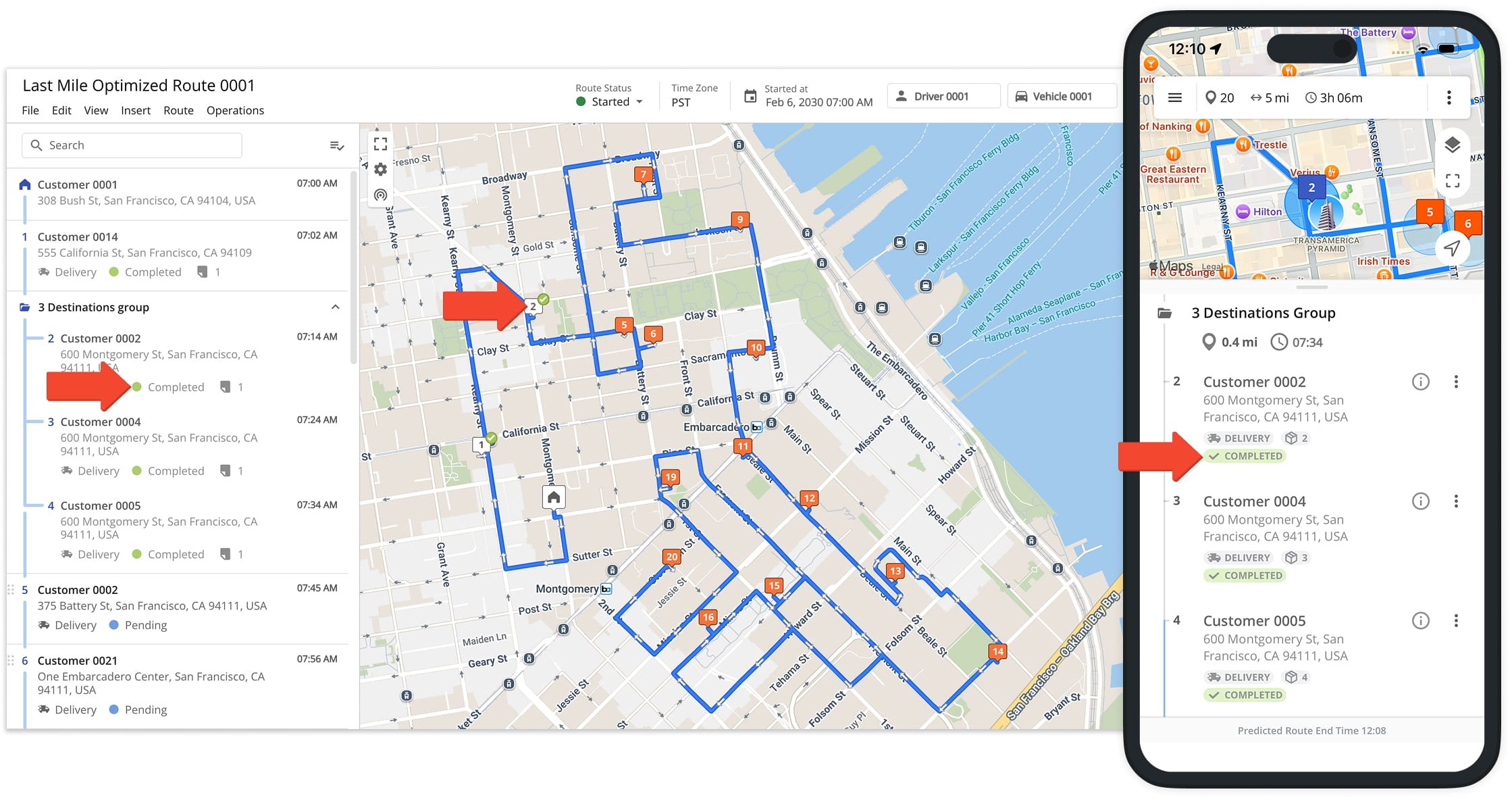
In the Route Editor, Route4Me organizes bundled stops into Destination Groups, keeping each stop separate with its own order details, ETA, and manifest, so nothing gets lost in the bundle:
- Click the arrow next to a Destination Group to expand the bundled stops.
- Select any stop within the group to view its full destination details.
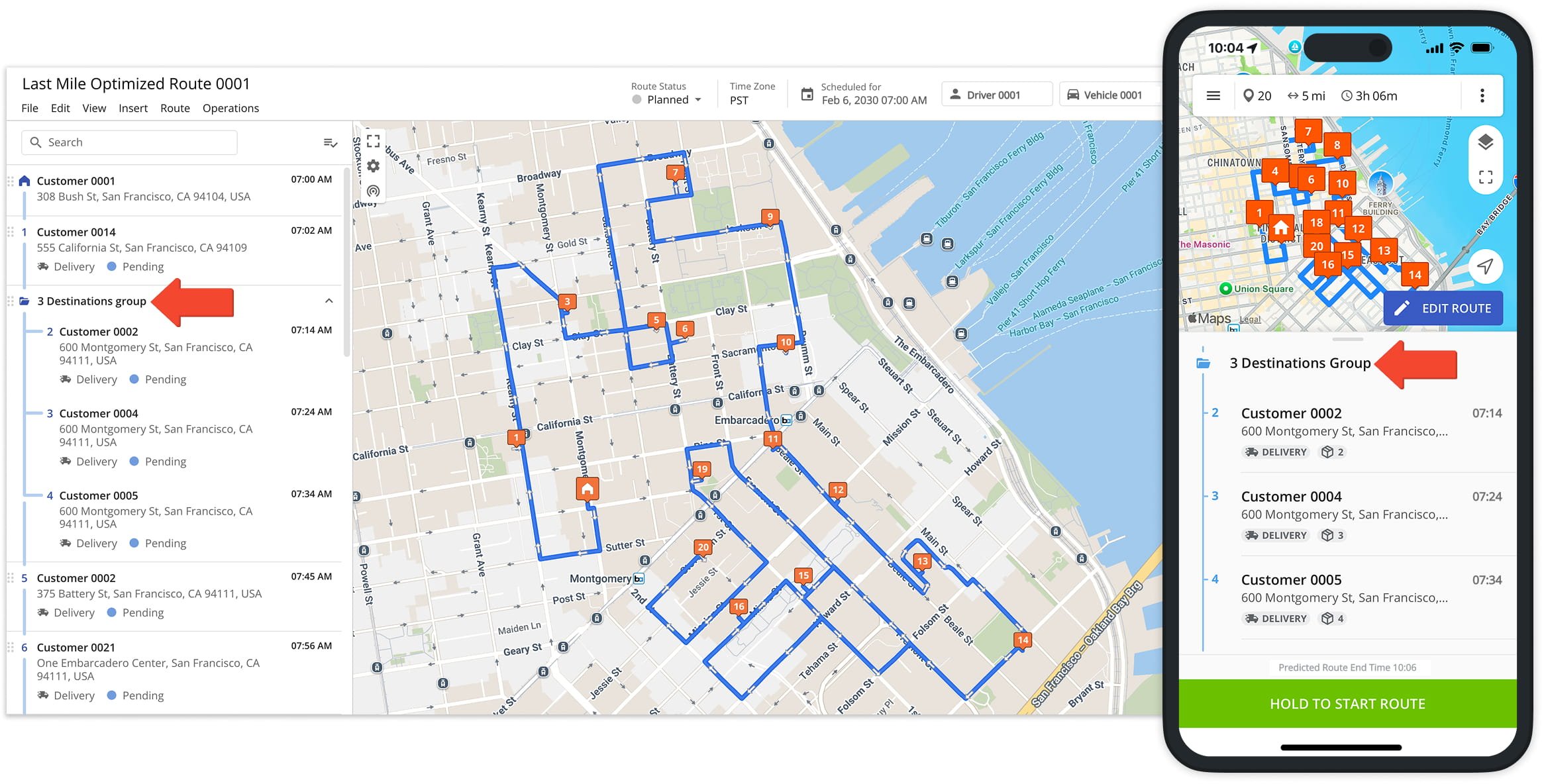
Keeping destinations separate within each Stop Group enables drivers and field team members to attach proof of visit statuses to individual destinations using Route4Me’s iOS and Android mobile apps.
Complete Bundled Destinations On Mobile App
When a driver or field team member opens a route in the Route4Me driver mobile app, bundled destinations are clearly grouped in the route list, making it easy to recognize multiple deliveries at the same location.
They can tap the information icon to view details for each destination within the bundle, including order information, so they can confirm each delivery individually.
This helps drivers capture accurate delivery statuses and proof of visit, even when multiple deliveries share the same stop.
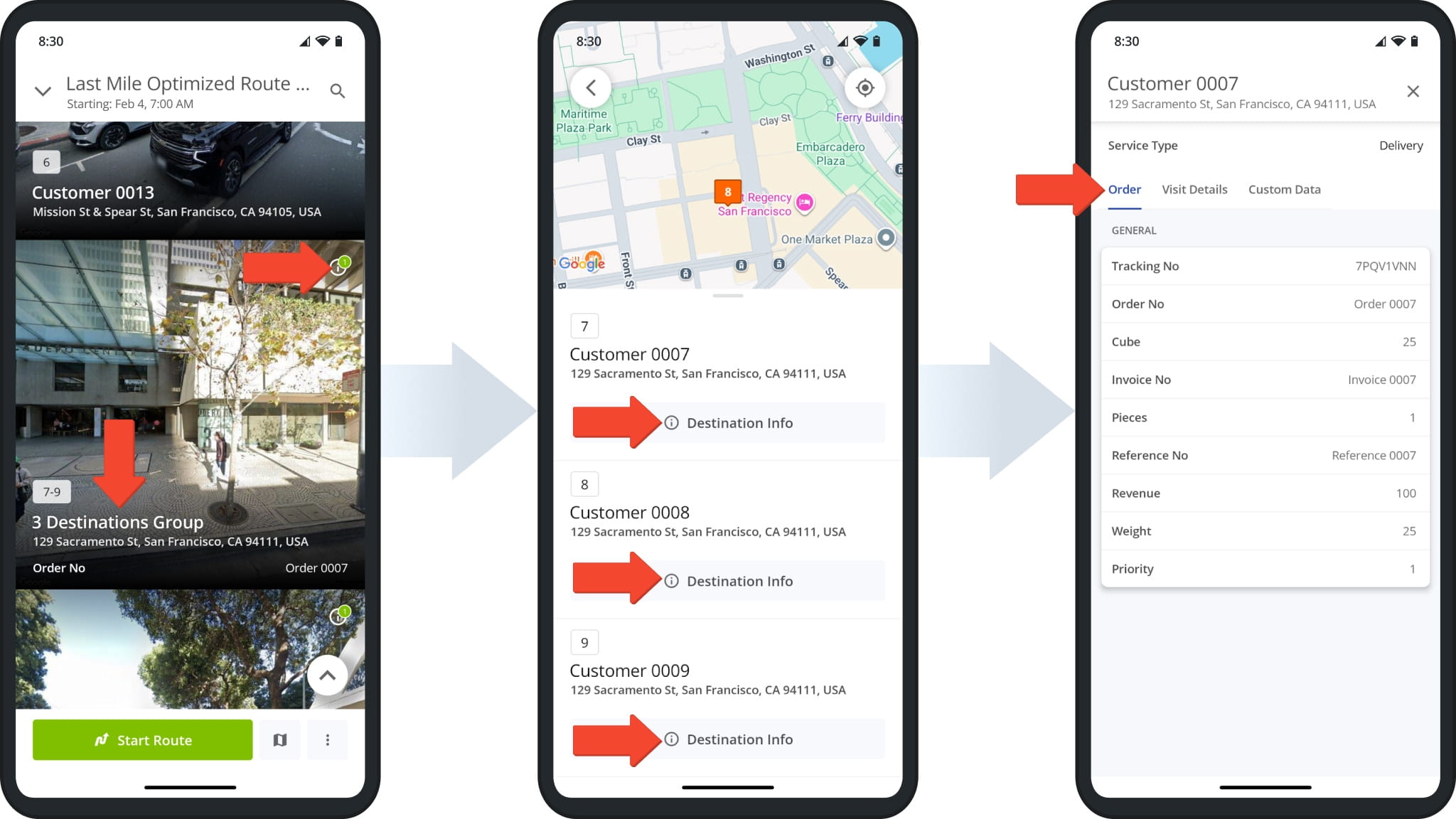
To mark a bundled stop as “Completed“, the Route4Me mobile app prompts the driver or field team member to confirm completion for each individual destination within the bundle.
Once all deliveries or visits in the bundle are confirmed, the app automatically marks the entire bundled stop as “Completed“, ensuring every destination is properly accounted for.
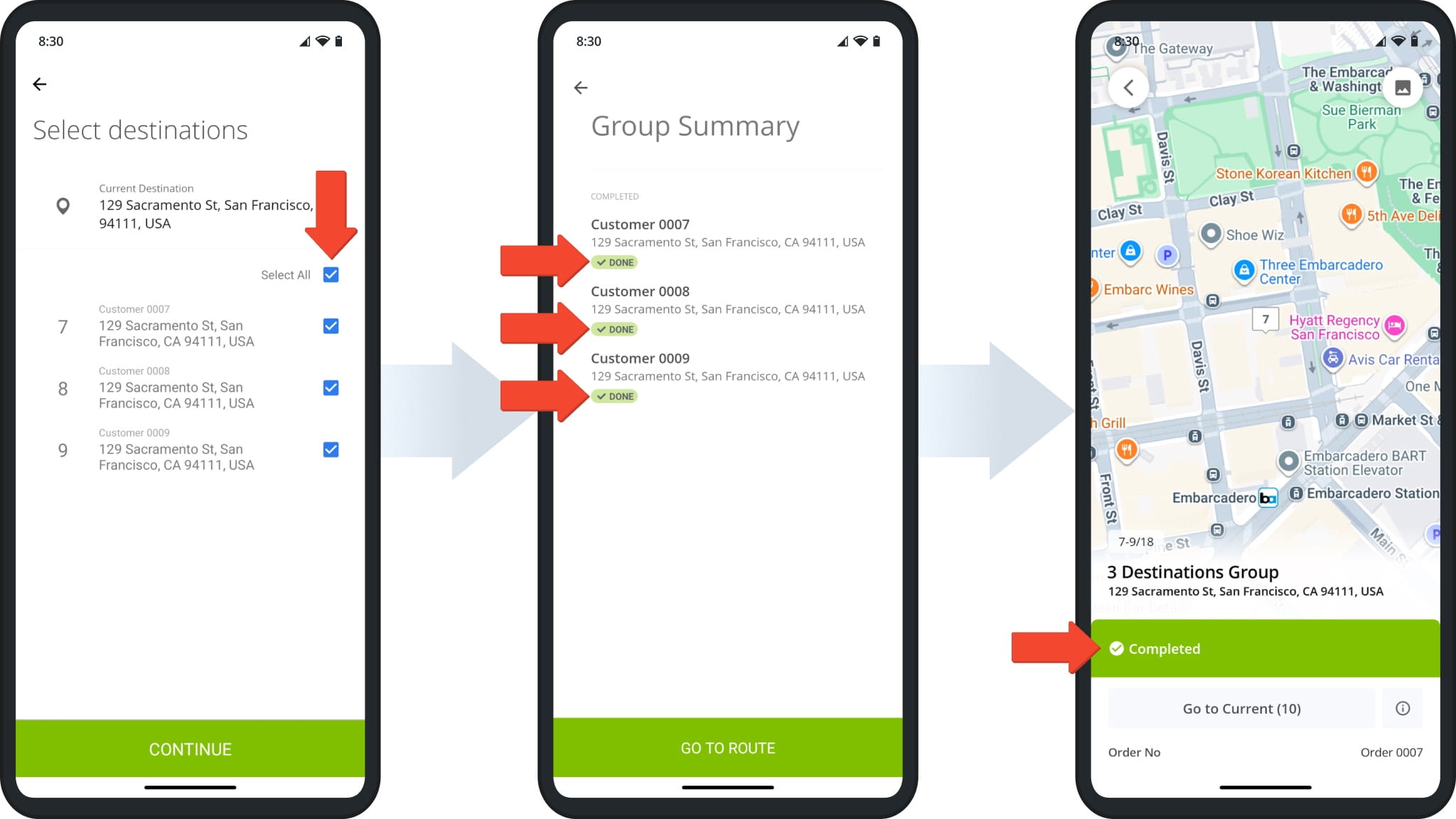
Bundled destinations are completed the same way as regular destinations, with drivers able to attach proof of visit or delivery to each individual stop.
Once the bundled stop is marked as “Completed“, all updates are automatically reflected in the Route4Me web platform.
Visit Route4Me's Marketplace to Check out Various Modules and Add-Ons:
- Operations
Advanced Team Management Add-On
About author: Daniel Archer